ARCHITECTURE
CITIES
LANSCAPES

ARCHITECTURE
CITIES
LANDSCAPES
Research Seminar in Architecture, Cities, and Landscapes
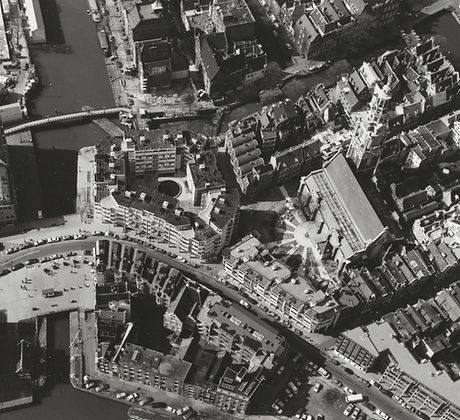
This course introduces students to historical research on urban development and architecture by covering a current topic. Joint discussion of texts and projects is combined with the exploration of an individual research question within the central theme. Attention is paid to different scales: from the long lines of the city, the neighborhood, streets and blocks, to individual buildings. Excursions and archive visits ensure that you get a quick picture of the practice of the architectural historian. Each year the seminar explores a specific topic connected to current research by one of the staff members. The topic of the seminar for the academic year 2025-2026 is the development of Amsterdam's inner city from 1965 onwards: from grand plans for city formation and massive demolition, to urban renewal and incorporation of new, small-scale (housing) architecture into the structure of the inner city. Views on what the city should be changed rapidly, and the old city became increasingly highly valued and increasingly well protected. What to do with the remnants of the highways, such as the Haarlemmer Houttuinen, or the large office towers, the controversial heritage of the 1960s-1980s? Knock it down rashly, like the Maupoleum, repurpose it, like the ABN AMRO building, carefully transform it with respect for the original concept, like the De Nederlandsche Bank building, or even list it as a monument, like P.C. Hoofthuis building on Singel? Ugly is not an argument, is the motto in conservation management, or is it?
After following this course, you will be able to:
-
Discuss the historiography of the theme, in relation to the history and heritage of the built and designed environment.
-
Carry out a historically layered, visual, and spatial analysis of a building, site, or a (urban) landscape.
-
Critically distinguish various (historical) approaches to architecture, city, and landscape, and relate them to current affairs.
-
Identify your own role as an architectural historian or heritage scholar in the professional field, and can participate critically and constructively.
-
Present and exchange ideas about the theme of the seminar with fellow students.
-
Make a clearly defined, substantiated, and feasible academic research proposal